What is daily life like in the Y.Honma laboratory? What do students learn here, and where do their careers take them?
This page provides an overview of the day-to-day activities and achievements that are not always apparent from research topics alone.

Our Students’ Characteristics
Our laboratory attracts many students whose interests have expanded to include urban planning, transport, data and computational methods whilst studying architecture. In addition to students from within the University of Tokyo or the field of architecture, there are also many students who join us from other universities, having studied subjects such as information technology, civil engineering and mathematics.
Whilst our starting points vary, what we have in common is a desire to understand space and the city not merely through our senses, but also quantitatively as phenomena.
Example of undergraduate universities:
The University of Tokyo, Chiba University, Waseda University, Keio University, Tokyo University of Science, Meiji University, Tokyo City University, Nagoya University, Kyoto Institute of Technology, Nara Women’s University, Osaka City University, Syracuse University, etc.
How We Conduct Research
Your research topic will take shape through discussions following your enrollment. You will proceed by clarifying your interests—such as which scale (architecture, urban, or national) you are most interested in, and what kind of data and methods you wish to employ. You may either develop an existing topic or propose a new one.
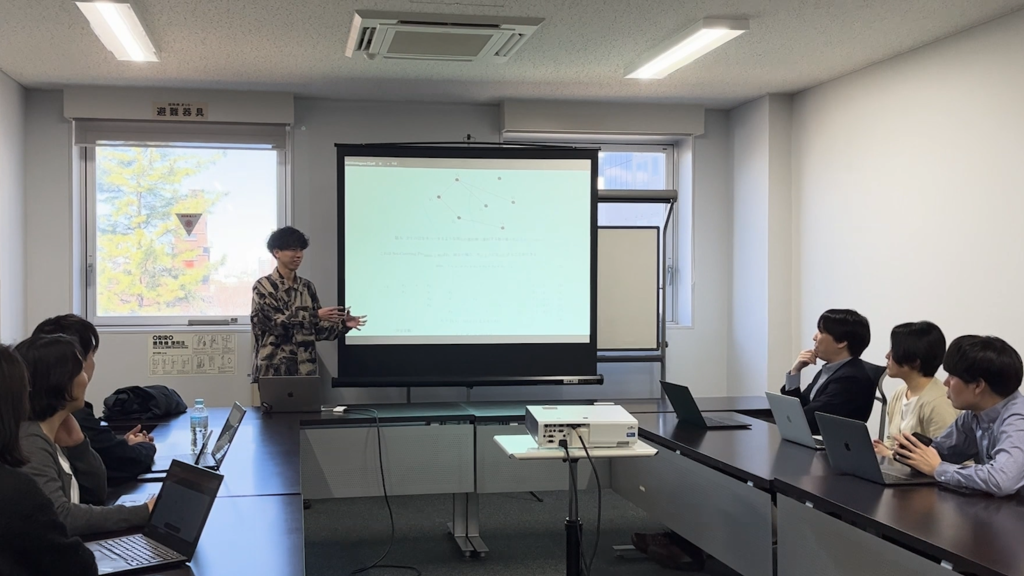
During the weekly seminar, students report on their progress and engage in discussions with all staff and students. English presentations and discussions are also conducted as necessary. In addition to the seminar, individual discussions with the supervising lecturer are held on demand.
There are no core working hours in our lab. However, as research progress is reviewed at weekly seminars, this programme is best suited to students who can manage their time independently and make steady progress with their research.
Research Environment
Our laboratory is located at the Institute of Industrial Science, The University of Tokyo (Komaba II Campus). We maintain close ties with other laboratories within the Department of Architecture, whilst also engaging on a daily basis with researchers from other disciplines, including mechanical engineering, information technology, chemistry and the social sciences.
Academic and administrative staff: 1 Associate Professor, 1 Specially Appointed Lecturer, 1 Assistant Professor, 2 Specially Appointed Assistant Professors, 1 administrative staff member (as of April 2026)
Students: 4 PhD students, 7 Master’s students (as of April 2026)
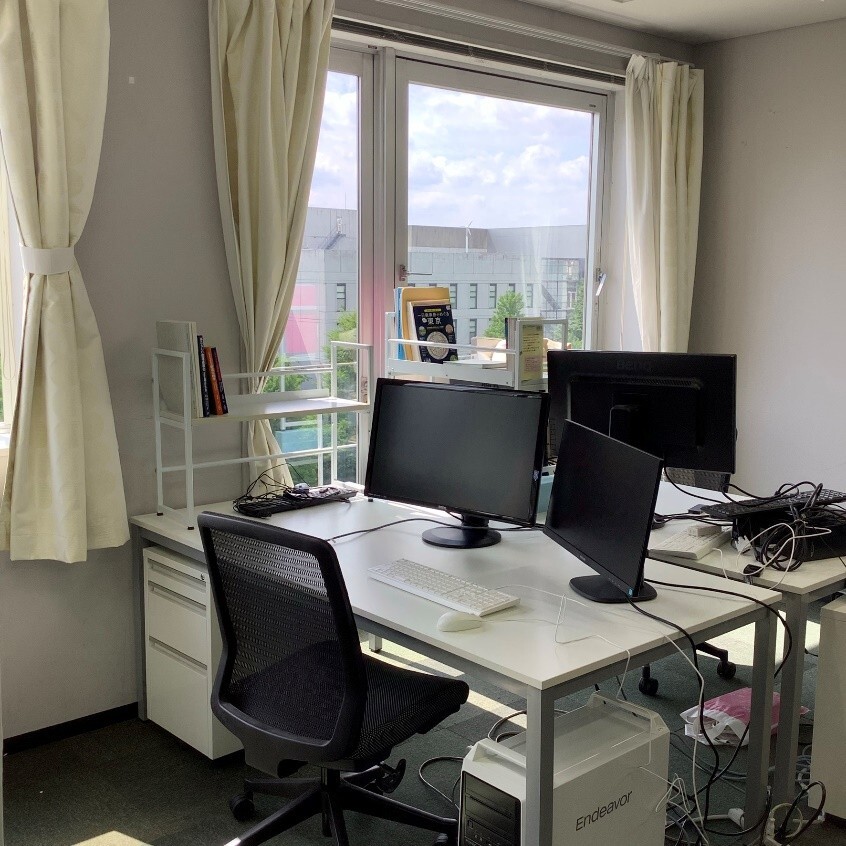
We provide each student with their own dedicated research space. Every student is allocated a high-performance PC equipped with a GPU, a desk and a storage unit, ensuring they have everything they need for their computing work.

Presentations at International Conferences and Peer-reviewed Papers
All Master’s students in our laboratory gain experience presenting at international conferences outside from Japan during their studies. Presenting at international conferences provides an opportunity to hone one’s ability to communicate research, whilst also serving as a platform for establishing connections with researchers from the globe.
In recent years, we have given presentations in Vienna, Washington DC, Colorado, India, Malaysia, Taiwan, etc.
Furthermore, as a result of two years of steady research, many students have successfully transformed their Master’s theses into peer-reviewed papers upon graduation, with numerous articles accepted for publication in journals such as the Architectural Institute of Japan’s Journal of Planning, the Journal of the Information Society for Architecture and Urban Planning, and the Journal of Urban Planning.
Awards and Accolades
Students and alumni of this laboratory have consistently received awards at academic conferences both in Japan and overseas, as well as at university-level ceremonies. At the heart of this are awards from leading academic societies in the fields of architecture and urban planning, such as the Architectural Institute of Japan and the Japanese Institute of Urban Planning. In addition to these, our achievements extend to university and research institute awards, as well as recognition for presentations at international conferences and in mathematical fields such as operations research and scheduling. A defining feature of this laboratory is that recognition stems not from specialization in a particular field, but from the process of conducting research with diligence, presenting findings, and compiling them into academic papers.
2025年 日本建築学会大会 建築計画部門 若手優秀発表賞 丸山純矢
2025年 UTokyo-IIS Research Collaboration Initiative Award 丸山純矢
2025年 都市計画学会 論文奨励賞 羽佐田紘之
2025年 日本オペレーションズ・リサーチ学会 学生優秀発表賞 井上皓陽
2024年 Best Paper Presenter, The 3rd International Symposium on One Health, One World Motoya Ueda
2024年 都市計画学会 論文奨励賞 井澤佳織
2024年 東京大学大学院工学系研究科長賞 山崎友暉
2023年 日本建築学会大会 情報システム技術部門 若手優秀発表賞 丸山純矢
2023年 日本建築学会大会 都市計画部門 若手優秀発表賞 羽佐田紘之
2023年 日本都市計画学会 年間優秀論文賞 羽佐田紘之
2023年 東京大学大学院工学系研究科長賞 井澤佳織
2023年 UTokyo-IIS Research Collaboration Initiative Award 羽佐田紘之
2022年 日本建築学会大会 都市計画部門 若手優秀発表賞 向井歩
2022年 日本都市計画学会 年間優秀論文賞 井澤佳織
2022年 UTokyo-IIS Research Collaboration Initiative Award 井澤佳織
2021年 日本建築学会大会 建築社会システム部門 若手優秀発表賞 井澤佳織
2021年 日本建築学会大会 都市計画部門 若手優秀発表賞 川口湧也
2021年 日本オペレーションズ・リサーチ学会 学生論文賞 羽佐田紘之
2021年 スケジューリング学会 奨励賞 羽佐田紘之
Career Prospects after Graduation
Career paths after graduation are diverse and extend beyond the fields of architecture and urban planning.
In addition to students who go on to work in design and construction, or in the property and property development sectors, there are also those who pursue careers in consulting, think tanks, finance, IT and telecommunications, transport and infrastructure, government agencies, and research institutions.
Examples of major employers:
Nihon Sekkei, Inc.; Taisei Corporation; Kajima Corporation; Tokyo Tatemono Co., Ltd.; Mori Trust Co., Ltd.; Nomura Research Institute, Ltd.; Mitsubishi Research Institute, Inc.; Boston Consulting Group GK; Goldman Sachs Japan Co., Ltd.; All Nippon Airways Co., Ltd.; East Japan Railway Company, Japanese Ministry of Land, Infrastructure, Transport and Tourism; NTT Docomo, Inc.; Hitachi, Ltd; Dentsu, Inc.; Research Centre for Advanced Science and Technology, the University of Tokyo; etc.
One of the distinctive features of this laboratory is that, although students are enrolled in the Architecture program, many choose career paths that are not limited to architectural practices or main contractors.
FAQ
Q. Is it okay if I’m not confident in maths or programming?
A. Prior knowledge is not required upon entry. Every year, there are students who learn Python and optimization solvers for the first time after starting the course. However, it is assumed that you are comfortable working with data and performing calculations.
Q. Will I be able to settle in even if I’m coming from another university?
A. You’ll settle in easily. We have a strong track record of students joining us from other universities and disciplines. During your visit or one-to-one consultation, please make sure to enquire not only about the research content but also about day-to-day life here.
Q. How are research topics decided?
A. After you enroll, we will narrow down your options through group discussions at laboratory meetings. We will then refine your research topic by considering the scale of your interest, the methods you wish to use, and the available data.
Q. I haven’t decided on my first-choice university/laboratory yet, but can I still come and discuss it?
A. That’s fine. It’s enough if you could just mention one topic you’re interested in.
Laboratory Tour
We are currently accepting requests for laboratory tours and individual consultations.
If you would like to find out more about our research, how we conduct our research, or student life, please do not hesitate to contact us.
We can arrange these either in person or online.